As WordPress continues to recycle old prompts, I pulled another prompt from The Coffee Monsterz Co to respond to today
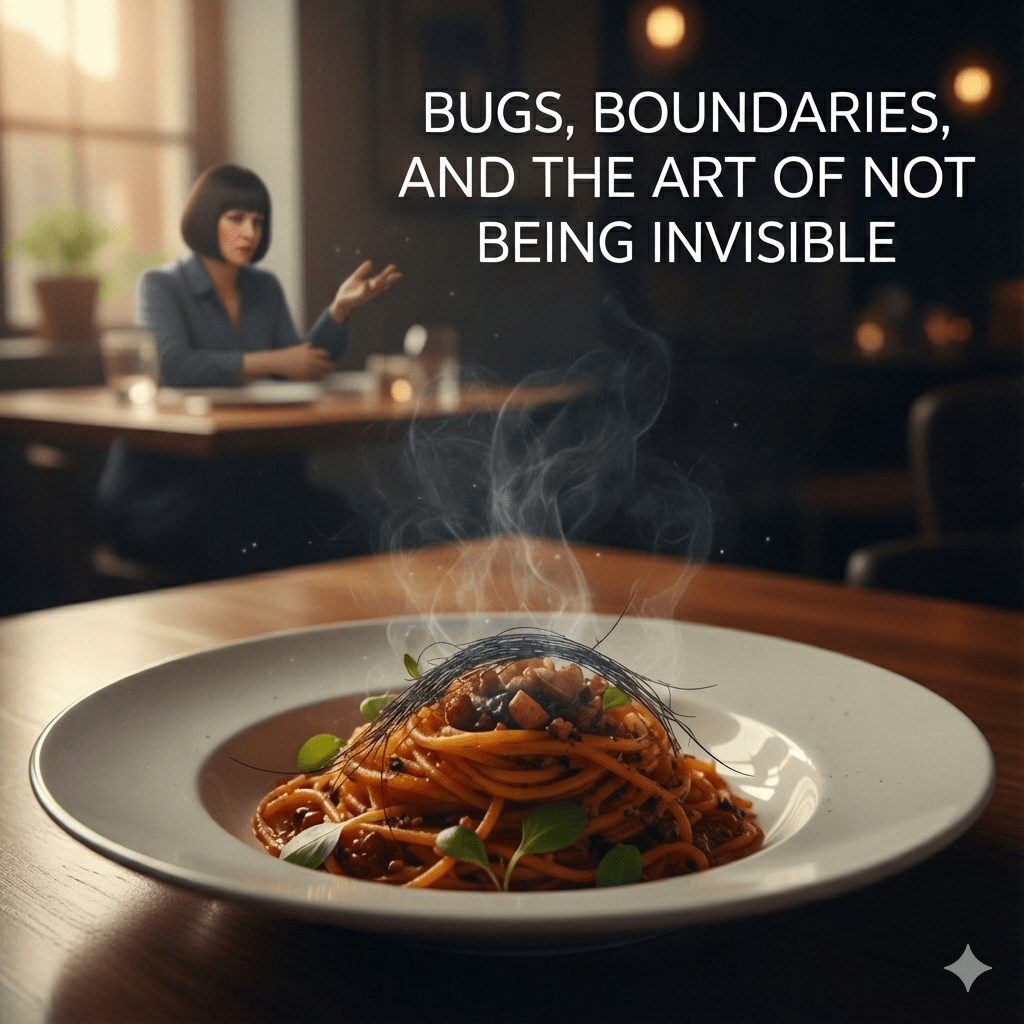
What would you do if you found hair in your food?
If I found a hair in my meal, the first thing I’d do is make sure I don’t eat another bite. While there’s certainly worse things to find in a dish than a stray follicle, it does lead me to wonder: If they missed this, what else is going on in that kitchen?
Setting the Tone
I actually had an experience like this just this past fall. Veronica and I went to try out a new local restaurant, and I discovered a dead bug in my water. It wasn’t anything big—just one of those little flying gnats—but I most certainly wasn’t going to drink it. Nor was I going to allow that to foreshadow how the rest of the meal would go.
As I’m constantly reminding myself to be more assertive, I think it’s important not to let stuff like that stand. In life, you have to set the tone. It’s not that I wanted to come across like a bull in a china shop, but at the same time, I wasn’t going to be a pushover. If something is wrong, I’ve learned it is better to address it than to just sit there in silent frustration.
The “Waiting” Philosophy
Any time I’m in a restaurant—or any other corner of the service industry, for that matter—I go out of my way to be friendly with the staff. Maybe it’s because I’ve worked in food service myself, or maybe it’s because I’ve seen the movie Waiting one too many times. I know what can happen to the food of an “annoying” customer. That movie explicitly spells it out: “The last people you want to mess with are the ones who see your food last.”
This isn’t to say I tip excessively to buy affection. I’m a standard 20% tipper unless the service is truly “above and beyond the call of duty.” However, I do tread carefully. I never want to come across as a “Karen” (or a “Kevin?”). If there’s an issue, I let the server know and give them the opportunity to fix it themselves. If they handle it, there’s no need to involve a manager.
The Point of No Return
My restaurant working experience is limited to fast food, so I might be off-base, but I’ve gotten the impression sometimes that staff “phone it in.” If the dining experience isn’t going well, it’s like they essentially give up. The food comes late, they’re not terribly friendly, and it’s almost like they’ve written me off as a customer, knowing I’m just going to pay and leave. To anyone who has worked in food service: does this actually happen? Is there a “point of no return” where a table is just abandoned?
I wonder sometimes about the kindness I show waitstaff. Is it out of genuine respect, or is it a fear of retaliation? I mentioned the scene in Waiting, and while that’s a reality for some, it’s a fantasy fulfillment for others. I wrote recently about being on the receiving end of a horrible customer. Rather than retaliate, I simply swallowed my pride and moved past it. That incident, perhaps more than anything else, taught me to sympathize and empathize with people in the service industry.
Basic Human Decency
At the end of the day, it’s basic human decency. I treat people like people. Even when I do get upset—like my recent experience dealing with my bank—I make a point of saying to the employee before I go off: “This is nothing personal, but I’ve got to vent…”
When restaurants provide opportunities for feedback, I always make sure to do so. Most professions in the 21st century are data-driven. I know from my own experience that businesses rely heavily on the data they get from customer surveys. Ultimately, these surveys are more than just a corporate checkbox for me. In an era where the face-to-face connection can sometimes feel like it’s being “phoned in,” that data becomes a modern way of ensuring I’m not just a ghost at a table. If I’m being written off in person, I’m going to make sure my experience exists somewhere in the permanent record.
It’s about more than just venting, too. When I get that server who is clearly having a rough shift but still manages to treat me with dignity, I use those surveys to shout it from the digital rooftops. Because I’ve been on the other side of that counter, I know that a positive data point can sometimes be the only thing that saves a service worker’s week.
Refusing to be Invisible
Whether it’s a hair in the food, a bug in the water, or a bank teller who is just the messenger for a bad policy, I’ve realized that being firm doesn’t mean being unkind. It just means refusing to be invisible. It’s about the expectation that we all deserve a basic level of respect and a better interaction than just “good enough.” We’re all just people trying to get through the shift; the least we can do is make sure we’re actually seeing each other instead of just going through the motions.
Thanks for stopping by Rebuilding Rob. Be sure to like 👍, comment, and subscribe below. It’s greatly appreciated! Also, feel free to follow me on social media and check out my recent posts!
- Artemis II: The Audacity of Human Potential
- Episode 7: The Teacher Armor is now LIVE!
- The Single Screw
- April: The Season Opener
- 134 – 1: Michigan is the Lone Survivor of My 2026 March Madness Bracket
AI art created with Google Gemini
The article “Bugs, Boundaries, and the Art of Not Being Invisible” first appeared on Rebuilding Rob
 Rebuilding Rob
Leave a comment