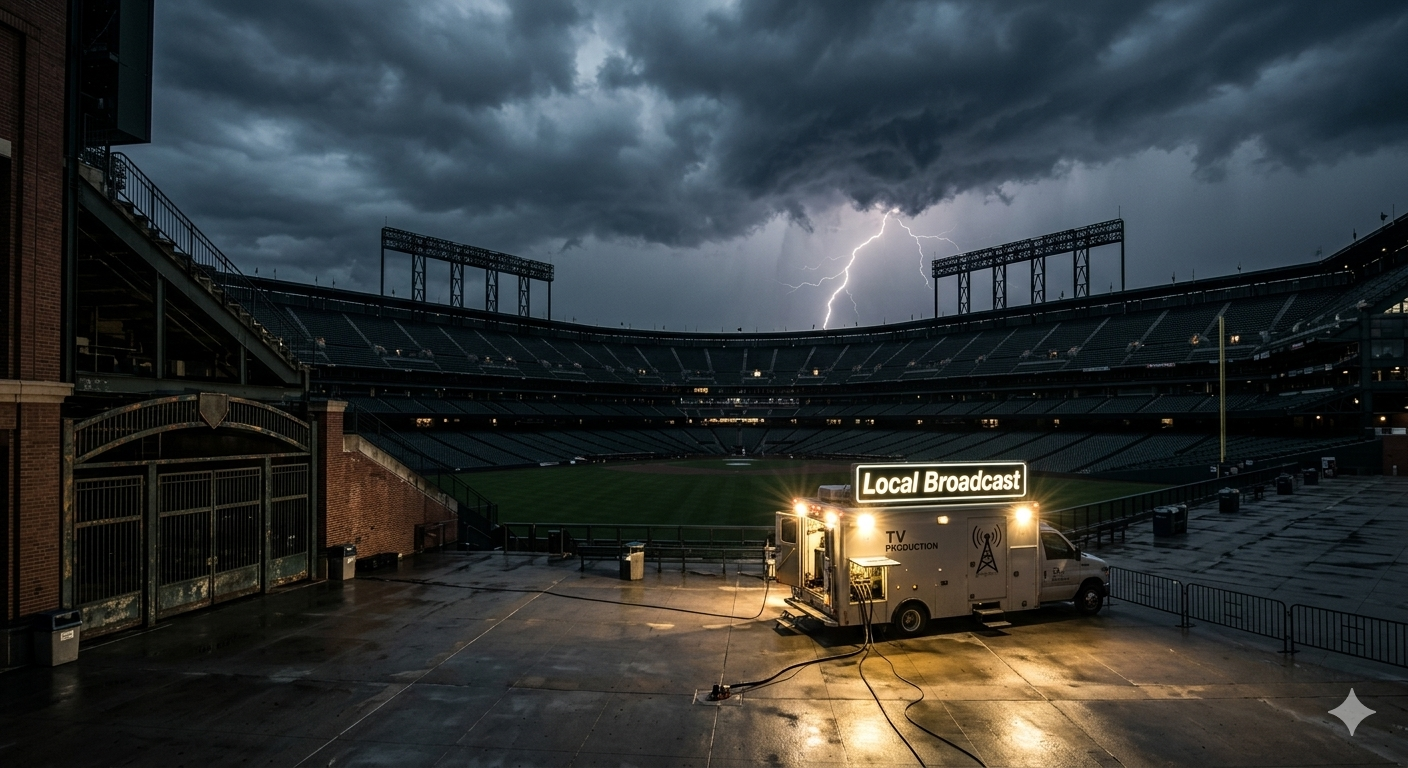
When we left off in Part 2, we looked at the stark, cold reality of a looming winter lockout. If Major League Baseball owners stick to their hard salary cap demands and the players’ union holds its historic line, the stadium lights across the country are going to stay dark next spring. The gatekeepers are playing a highly dangerous game of chicken with a modern audience that might just click over to something else and never look back.
So, what happens to a baseball addict when the worst-case scenario becomes reality? Where do you go when the highest level of the sport decides to self-destruct over corporate margins?
The answer might be sitting literally five miles from my house.
The Independent Alternative
Right here in Metro Detroit, just off the highway in Utica, sits UWM Field (formerly Jimmy John’s Field) home to the United Shore Professional Baseball League (USPBL). To be technically accurate, this isn’t a “minor league” system. There are no corporate parent clubs or official MLB affiliations here. It’s a completely independent developmental league designed for players who were overlooked in the draft, bypassed out of college, or simply aren’t ready to hang up their spikes.
It is baseball in its purest, most unadulterated form. It’s an ecosystem built entirely on hustle. Over the last decade, a few dozen players from the USPBL have caught the eye of major league scouts and signed affiliated minor league contracts. A historic handful have even beaten the astronomical odds and made it all the way up to a Major League Baseball roster.
If MLB chooses to lock out its fans in 2027, leagues like the USPBL aren’t just a backup plan; they are a viable sanctuary. They offer affordable tickets, close-up action, and a reminder of why we fell in love with the diamond before we knew what a collective bargaining agreement was. In fact, if the big league stadiums stay locked up next spring, I have a feeling that getting a ticket to a USPBL game is going to be harder than ever. The fans will seek out the game wherever it is being played with heart.
The Broken International Gate and the RSN Mess
The irony is that while grassroots independent baseball thrives on raw opportunity, Major League Baseball’s corporate structure does everything it can to overcomplicate and restrict talent. You can see this broken logic glaringly obvious on the global stage.
Right now, the international player acquisition system is an absolute absurdity. When a superstar player in a foreign league wants to come to the United States, MLB teams engage in a convoluted “posting system” where massive corporate entities submit blind, multi-million-dollar bids just for the right to negotiate a contract. Why are we treating human beings like intellectual property auctions? Baseball desperately needs a true, unified international draft, or simply to allow international prospects to enter the regular, existing MLB draft pool.
But you don’t have to look all the way across the ocean to see how anti-fan the corporate suits can be; you just have to look at your own television screen.
The modern regional sports network (RSN) model and its archaic TV blackout restrictions are actively destroying the next generation of baseball fans. The league operates under the greedy delusion that withholding games from fans is a viable strategy to force them into cable packages or expensive regional streaming apps. There are entire pockets of the country sitting between markets that are completely blacked out from watching any of their closest teams.
Thankfully, the crumbling RSN ecosystem is forcing a return to sanity. Teams are realizing that if people can’t easily watch you on a random Tuesday night, you cease to exist culturally. Right here in Detroit, the Pistons recently announced a pivot to airing games on local over-the-air Channel 20, completely bypassing the RSN model. Even the Tigers are seeing the light, with Fox 2 expanding its schedule to carry ten local over-the-air broadcasts this season. True sports marketing requires accessibility, not a digital paywall.
The Blueprint: Banana Ball
Whether it is freezing out local fans via lockouts, overcomplicating international talent, or blacking out local TV screens, MLB operates under a deeply flawed, arrogant assumption: They believe we owe them our attention.
Meanwhile, the “Banana Ball” phenomenon is completely shattering the sports entertainment landscape by doing the exact opposite. What started in a small Georgia ballpark has exploded past just selling out Major League stadiums. They are now filling 80,000 to 100,000-seat college football stadiums—building makeshift fields across a gridiron just to give people an experience.
Personally, I managed to score tickets for a game coming to Comerica Park this September. It features a couple of the other teams from their expanding six-team league rather than the Bananas themselves, but I’m genuinely looking forward to experiencing the energy and seeing their fan-first policies in action. To be completely honest, my perception from watching them on TV is that Banana Ball is essentially “baseball for people who get bored watching baseball.” I don’t think I’m going to start traveling the country chasing their tour stops, but I deeply respect the hustle.
The Savannah Bananas succeed because they recognize a fundamental truth that MLB refuses to learn: sports are an entertainment product where the spectator is the highest priority.
Major League Baseball doesn’t need a hard salary cap to save its bottom line. It needs a massive dose of humility. It needs to look at the hustle of independent ballparks like the USPBL, the accessibility of local over-the-air television, and the pure, fan-first philosophy of Banana Ball.
The game itself is beautiful, resilient, and timeless. But if the billionaire owners choose to lock the gates this winter, they might finally learn a brutal lesson: the love of the game doesn’t belong to them. And the fans will happily find it somewhere else.
Rebuilding a life takes grit, consistency, and a lot of ‘Option C’ thinking. Whether I’m on the road beyond 1,000 consecutive days of blogging or reflecting on the decade of work that brought me here, the mission remains the same: No glitz. Just the work. New to the blog? Start your journey here to see the blueprint and the ‘Tricorder’ perspective behind the rebuild.
Today’s post is inspired by the WordPress Daily Prompt. While I’ve taken the topic in my own direction for the Road to 1,000 Days, you can find more responses to today’s prompt HERE.
Thanks for stopping by Rebuilding Rob. Be sure to like 👍, comment and subscribe below. It’s greatly appreciated! Also, feel free to follow me on social media and check out my recent posts!
- Rob Reviews: Star Trek: Strange New Worlds season 4, episode 1 “Valles Marineris”
- Priceless: Why College Was My Best Purchase (Even If I’m Still Paying For It)
- The Legend of the Street Fight
- Battle Tested and Flying Solo 
- The TikTok Paradox: A Screen Time Confession
AI art created by Google Gemini
The article “The Game is Found Elsewhere (Baseball on the Brink – Part 3)” first appeared on Rebuilding Rob.

Leave a Reply