The Weight of Three Words
In the classic Star Trek episode “The City on the Edge of Forever.” Captain James T. Kirk travels back to 20th-century Depression-era America. There, he falls in love with a social worker named Edith Keeler. One night, during a conversation, Keeler says to Kirk, “Let me help.” Kirk opines that in the future, there will be a poet who captures the weight of those three words—“let me help”—it would be even more powerful than “I love you.”
“I love you” demands a reaction. Most of us conclude that “I love you” is the most powerful phrase in the English language. I know personally, when someone has said that to me, it is the most gratifying feeling I’ve ever had. At least, in the moment it is.
The truth is, people say “I love you” all the time and don’t mean it. Sometimes people will say it to a boyfriend, girlfriend, husband, or wife out of sheer desperation—as a last-ditch effort to salvage a dying relationship.
I bring all this up not because I necessarily think “let me help” is more powerful than “I love you,” but because there is another phrase that I would argue is even more impactful than either of those, at least when it’s uttered with sincerity:
“I’m all in.”
Team Jessica and the Borg
A few years back, when I was dating Jessica, we were getting to a point where we were starting to float the possibility of moving in together. Jessica owned a house—a very nice one, at that. I know now, looking back, why I was reluctant to agree to move in with her: I didn’t want to. Another part of it was that I didn’t like the idea of just becoming an accessory to her world, which ultimately became a massive part of the problem in our relationship.
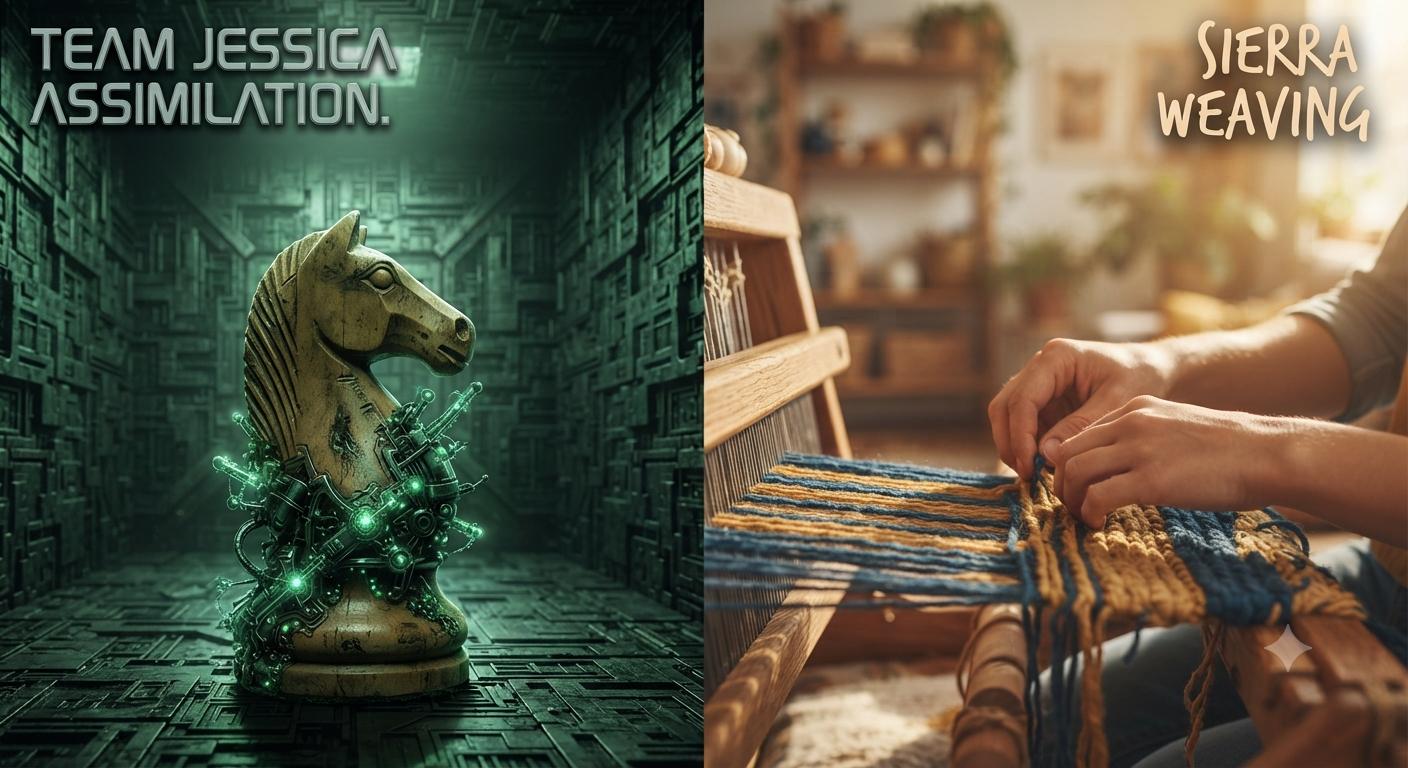
The trouble with Jessica’s version of “I’m all in” was the fine print. Looking back, I realize she didn’t want a partner to build a life with; she wanted a permanent “plus-one” for a life she had already mapped out. It felt less like blending families and more like being recruited to Team Jessica. Every restaurant, every event, every expectation—it all ran on her terms. It was like being assimilated by the Borg: a slow, polite erasure of your own autonomy until you’re just a kept man in someone else’s museum.
I remember a conversation we were having one day where we were talking about us, where we stood, and everything else. I remember her saying to me, “I’m all in.” We may have already said “I love you” to each other before this; I don’t really remember. But this came up in the context of me moving into her space and more or less blending our families and our lives together.
Words Versus Intention
Those are some pretty powerful words. When someone tells you exactly where they stand by saying “I’m all in,” they are signaling that they are fully invested and committed to making something work.
Yet, looking back, there’s an ironic twist. That’s the danger of a phrase like “I’m all in.” Anyone can say the words when things are moving according to their design. But true investment isn’t a verbal contract delivered in an echo chamber; it’s mutual friction, compromise, and actual teamwork. When we ultimately broke up, she didn’t put up a fight at all—which, to me, proves that her declaration of “I’m all in” was just as hollow as a cheap “I love you.” She didn’t fight for me. Maybe it’s because she knew I had my mind made up; I remember when I ended things, it was under no uncertain terms. I was very definitive. I didn’t beat around the bush. And because we hadn’t talked for three or four days prior, she probably saw the writing on the wall.
Still, in that specific moment, the words “I’m all in” felt heavy. They told me where she claimed to be. I don’t know if I’ve ever had anybody else actually say those exact words to me—certainly not often.
Weaving, Not Assimilating
I guess I bring this up today for the same reason I brought up “the look” in a recent post. It’s still early in my relationship with Sierra, but I can see that this is tracking along a very different trajectory. Unlike my last relationship, we are developing real, mutual footing pretty fast—without the forced compromises or the hidden breadcrumbs.
Contrast that with what I’m seeing now with Sierra. It’s not an assimilation; it’s a weaving. We aren’t trying to draft each other into separate, pre-existing kingdoms. It’s a natural, back-and-forth rhythm—taking turns, sharing the tab, respecting each other’s spaces and work, and actually meeting in the middle. You don’t have to surrender your identity to be part of something real. No scripts. No breadcrumbs. Just two people actually choosing each other, every single day
Balancing deep personal reflections with the relentless machinery of daily publishing isn’t always easy—more on that in No Glitz, Just the Repeat.
Rebuilding a life takes grit, consistency, and a lot of ‘Option C’ thinking. Having crossed the 1,000-day milestone, I’m now charting the territory beyond. The mission remains the same: No glitz. Just the work. New to the blog? Start your journey here to see the blueprint and the ‘Tricorder’ perspective behind the rebuild.
Today’s post is inspired by the WordPress Daily Prompt. While I’ve taken the topic in my own direction for the Road beyond 1,000 Days, you can find more responses to today’s prompt HERE.
Thanks for stopping by Rebuilding Rob. Be sure to like 👍, comment and subscribe below. It’s greatly appreciated! Also, feel free to follow me on social media and check out my recent posts!
- Why I Blocked This Movie From My Memory
- Rob Ranks: Star Trek: Strange New Worlds, season 2
- Beating the Bell
- Out of the Woodwork
- Episode 3.8 Too Dumb To Quit is LIVE!
AI art created by Google Gemini
The article “The Fine Print of ‘I’m All In’” first appeared on Rebuilding Rob

Leave a Reply