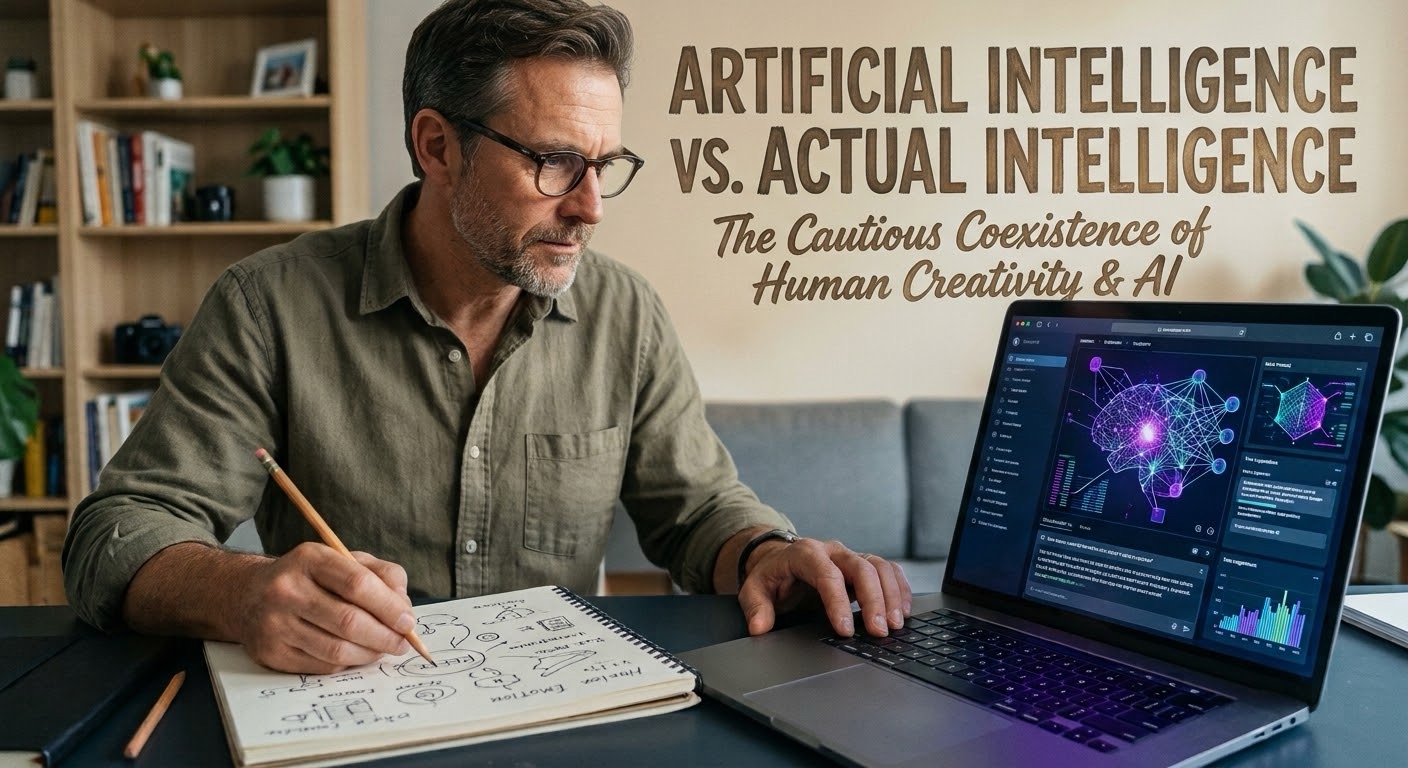


This is a tricky one. AI has gotten a bad rap lately, primarily because it requires a lot of energy to operate. The environmental impact of an AI data center is undeniable—unless you’re a Republican.
As humans, we have a tendency to make technological advances simply because we can, without bothering to ask if we should. (And yes, I stole that line from Jeff Goldblum’s character in Jurassic Park when he’s talking about bringing back dinosaurs—if the shoe fits.) When it comes to technological advancements, we’re often far more interested in whether we can do something than we are in the moral implications of doing it.
I remain cautiously optimistic, but it’s a slippery slope. I want to believe that humans will rein in AI before it gets out of control. I refuse to believe the world will end up like The Matrix or The Terminato
That said, I have no doubt that AI will render many human jobs obsolete. But I don’t want to see a world where Artificial Intelligence completely replaces Actual Intelligence.
I worry sometimes that I lean too heavily into AI myself. I never want to use it to the point where I hand over creative control—because at that point, I’m no longer being creative. I use AI to assist me with my writing and my ideas, not to live my life or do the thinking for me. Honestly, I’m still occasionally shocked at what AI can do—even on a free version—though I still struggle to get AI illustrations to capture exactly what’s in my head. AI can be programmed with the illusion of creativity, but it doesn’t have true lived experience.
To be honest, I’m not even sure humanity has fully adapted to the internet yet, let alone AI. I can already feel my own typing skills diminishing just from using voice dictation on my phone for daily text messages and drafts. If a feature as simple as voice dictation can erode a physical skill like typing, why couldn’t AI gradually erode our ability to think independently or creatively? It might not rob us of the ability outright, but as the old saying goes: use it or lose it. If we stop exercising those creative muscles ourselves, they’re bound to atrophy.
Rebuilding a life takes grit, consistency, and a lot of ‘Option C’ thinking. Having crossed the 1,000-day milestone, I’m now charting the territory beyond. The mission remains the same: No glitz. Just the work. New to the blog? Start your journey here to see the blueprint and the ‘Tricorder’ perspective behind the rebuild.
Thanks for stopping by Rebuilding Rob. Be sure to like 👍, comment and subscribe below. It’s greatly appreciated! Also, feel free to follow me on social media and check out my recent posts!
- Artificial Intelligence vs. Actual Intelligence
- Character Analysis: The Beauty of Being Messy
- Why The Handmaid’s Tale Terrifies Me More Than 1984
- The Most Mismarketed Movie of the ’90s: Pleasantville
- Episode 3.9 No More Glaciers in LIVE!
AI art created by Google Gemini
The article “Artificial Intelligence vs Actual Intelligence “ first appeared on Rebuilding Rob


Leave a Reply