12 Years in the Making
Twelve years later, I finally got around to watching Transformers: Age of Extinction. After watching it, I’m remembering exactly why I waited so long.
I recall the movie getting lackluster reviews even back in the day. However, as a child of the 80s and a fan of Transformers in particular, I remember being very excited about the prospect of the Dinobots making their live-action feature film debut. Robots who transform into… Dinosaurs? The concept itself is pure gold. But the presentation? Less than memorable.
Director Michael Bay returned for this, the fourth installment of the franchise. Even back then, I remember thinking that was a little unusual. A lot of times, big-name directors will make the first two installments, or perhaps a trilogy, and move on. So, it definitely caught my attention that Bay was returning for part four.
The movie begins with a new status quo. Following the devastating battle in Chicago, the Autobots are no longer seen as mankind’s protectors. Political maneuvering has gotten the country to distrust and fear them just as much as the evil Decepticons. So, the Autobots are on the run—some are hiding, others are lying in wait. You know, the whole “robots in disguise” thing.
The “Status Quo” Shakeup
Gone are the Witwicky family, with no real explanation as to why. Age of Extinction stars Mark Wahlberg as a lackluster inventor who inadvertently stumbles onto Optimus Prime in his truck mode. It’s funny to me because so many elements of Wahlberg’s character, Cade Yeager—even the dynamic between him and his daughter—are lifted very much from the first Transformers film. Cade is the classic luckless entrepreneur. By the way, his daughter Tessa (Nicola Peltz) is essentially the next version of the hapless but gorgeous “Michael Bay babe.” She looks a lot like Dark of the Moon’s Carly (Rosie Huntington-Whiteley) but fits the character mold of the first film’s Mikaela (Megan Fox).
As I mentioned, the story deals with the Transformers of both armies being on the run. Kelsey Grammer plays Harold Attinger, a CIA agent tasked with hunting down the remaining Transformers. What isn’t discovered until later is that he’s actually being assisted by Lockdown, a robotic bounty hunter. While this is happening, tech magnate Joshua Joyce (Stanley Tucci) is working to recover Transformers technology to build his own army of transformable robots for military defense. Little does Joyce realize that his landmark creation, Galvatron, is essentially a reincarnated version of the Decepticon leader, Megatron.
A Convoluted Mess
The remaining Autobots, including Optimus Prime, are trying to escape Lockdown and Galvatron all while protecting the Yeagers. If this sounds like a lot to keep up with, it is. And this is to say nothing about the Dinobots, who don’t enter the fight until the final act of the movie, despite being the biggest marketing point of the film back in the day. I was sitting with both my sons for an hour saying, “Where are the Dinobots?” Ultimately, they join the fight and are the difference-makers, much like the Hulk was in the first Avengers movie. Delayed emergence in literature is one thing; this, however, felt like a straight-up bait-and-switch.
The Character Assassination of Optimus Prime
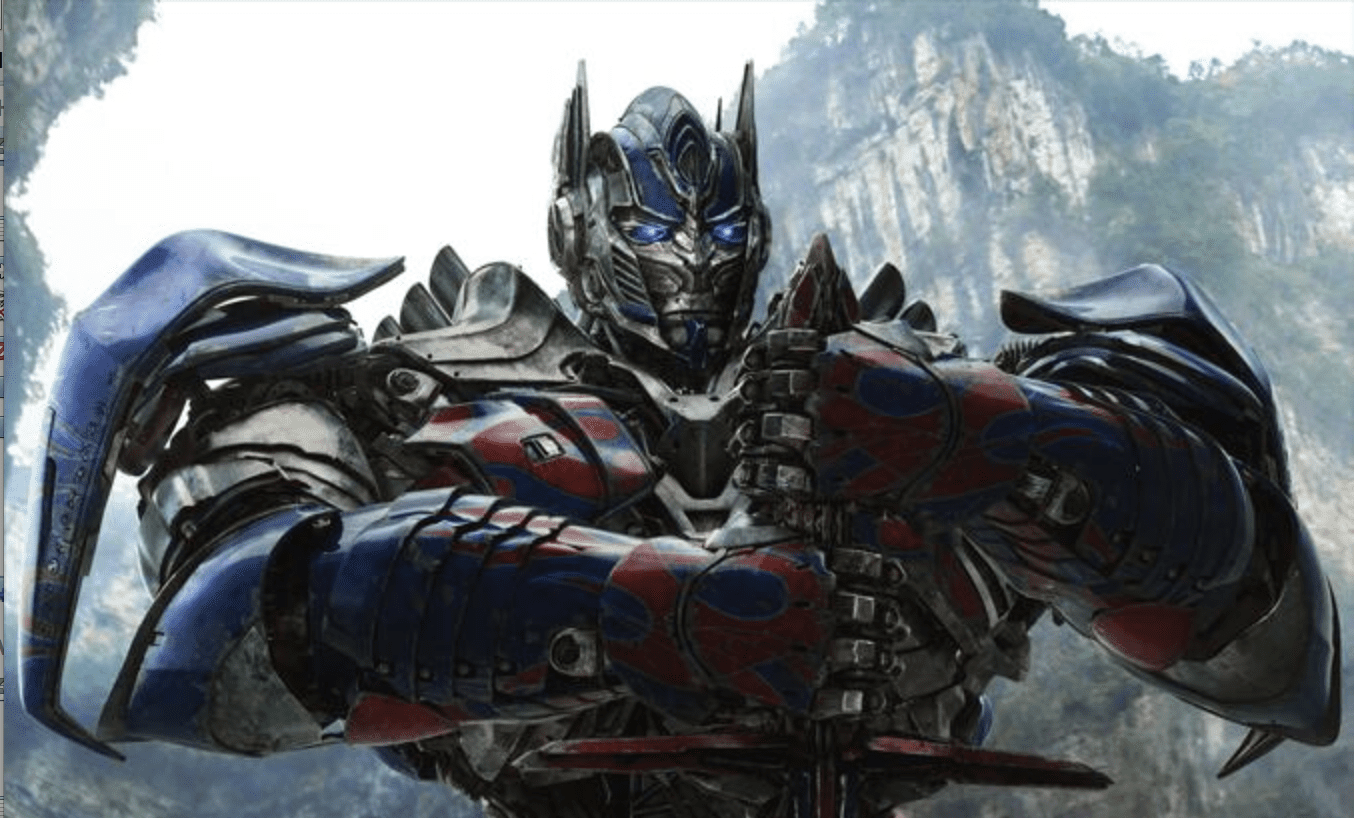
Beyond the convoluted plot, there is a fundamental issue with how Optimus Prime is handled. I’m a firm believer in the idea that you have to be “strong enough to be gentle.” It’s a core component of leadership. Often, writers use a “deconstructionist” approach to strip a hero down to their bare essentials to see what they are really made of. But that isn’t what happened here. This felt like a gross misinterpretation—almost a character assassination. Watching Optimus vow to kill a human felt like a complete betrayal of his established morality. I understand the need to raise the stakes, but there are ways to do that without sacrificing the very soul of the character.
I have to admit that even I felt some tension as Optimus Prime was captured by Lockdown, wondering if he might actually die. It’s always nice to hear Peter Cullen reprise his role as the voice of a childhood hero. But even with that, the pacing dragged; I found myself checking out, switching laundry, and wandering off more than once.
Final Take
This is a different review for me. I usually stay in my “sci-fi action adventure” wheelhouse, only watching things I know I’m going to like. Transformers: Age of Extinction disappointed me. I’m realizing now why I waited so long to see it.
If you’re a die-hard completist, you’ve probably already seen this. If you’re looking for the heart and soul of the Transformers universe, keep looking. Age of Extinction is a hollow spectacle that mistakes loudness for depth and character assassination for “edginess.” Save your time, keep your childhood memories of Optimus Prime intact, and stick to the G1 classics.
Rob Score: 2 out of 5 Stars
Rebuilding a life takes grit, consistency, and a lot of ‘Option C’ thinking. Having crossed the 1,000-day milestone, I’m now charting the territory beyond. The mission remains the same: No glitz. Just the work. New to the blog? Start your journey here to see the blueprint and the ‘Tricorder’ perspective behind the rebuild.
Today’s post is inspired by the WordPress Daily Prompt. While I’ve taken the topic in my own direction for the Road beyond 1,000 Days, you can find more responses to today’s prompt HERE.
Thanks for stopping by Rebuilding Rob. Be sure to like 👍, comment and subscribe below. It’s greatly appreciated! Also, feel free to follow me on social media and check out my recent posts!
- Rob’s Star Trek Strange New Worlds Season 4 Rankings
- New Ground, hard lessons
- Rob Reviews Star Trek: Strange New Worlds 4.10 Tomorrow’s Enterprise
- Karma is a statistic
- Why I Write: On Trends, Therapy, and 1,100 Days of Not Caring What You Think
The article “Rob’s Retro Review – Transformers: Age of Extinction (2014)” first appeared in Rebuilding Rob


Leave a Reply