

I’m actually surprised we don’t see more literary sequels. Or maybe we do, and I’m just not as literate as I think I am?
It seems like it would make perfect sense for the literary world to take a page from Hollywood. Studios throw millions of dollars into mediocre sequels to blockbusters, all in the hope that they might recapture even half the magic—and revenue—of the original.
A while back, I saw that Bret Easton Ellis—the author of American Psycho—was batting around the idea of a sequel, transposing Patrick Bateman into the 2008 economic crash. That’s a grim prospect, but it got me thinking. If you’re going to bring back a monster of consumerism, why not set him in the decade where the cultural ground shifted beneath our feet?
For me, the 90s were an incredibly odd, liminal space. You had the first half of the decade—the authentic, grit-stained era of grunge—which felt like a genuine reaction to the excess of the 80s. But once the music died with Kurt Cobain, the pendulum swung hard. Suddenly, pop was back in vogue, and the boy bands were taking over the airwaves.
I’d be fascinated to see Patrick Bateman try to navigate that. How does a man obsessed with status and “the look” handle a culture that transitioned from flannel-clad authenticity to the rise of Dr. Dre and Tupac? How does he tread that line when the rules of what is “cool” keep changing?
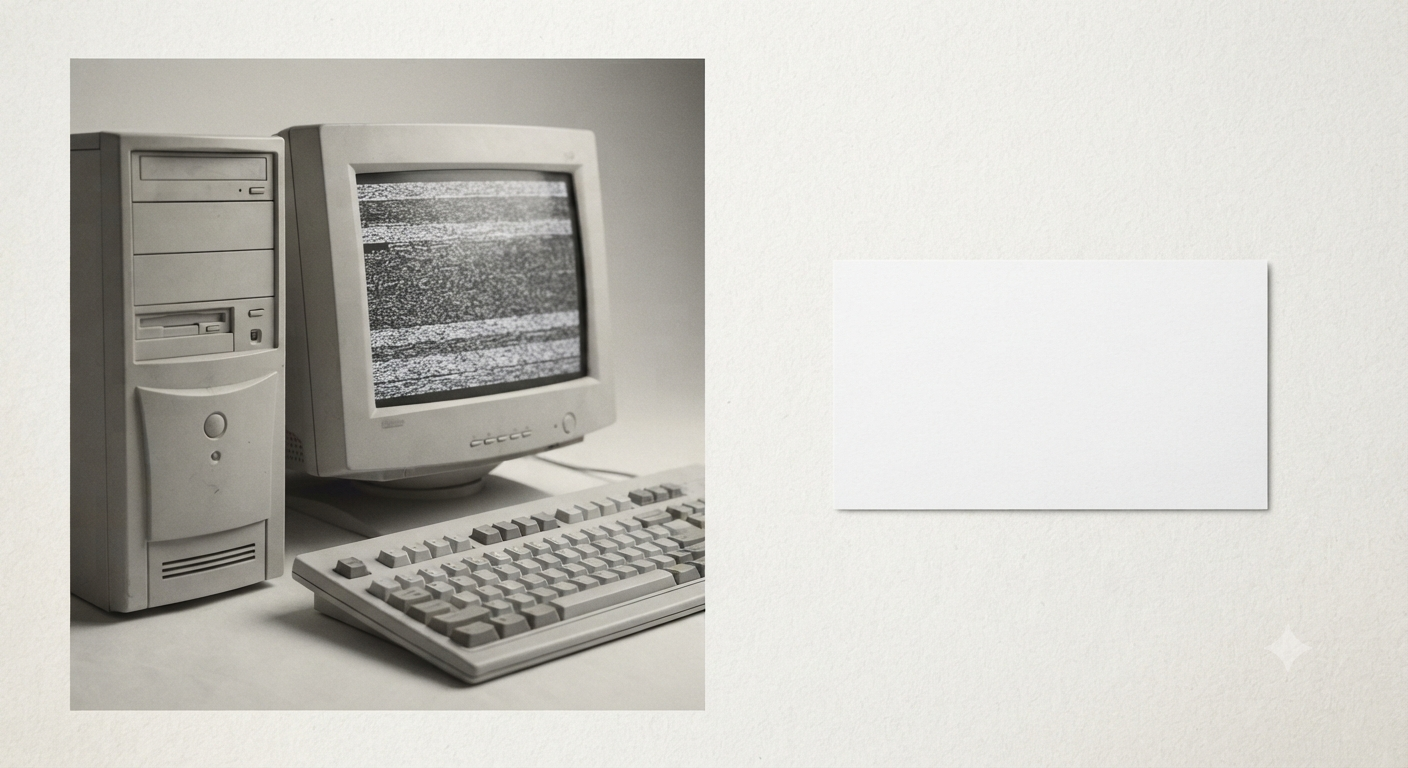
And if you pushed him into the 2000s, it gets even better. By then, I was pushing 30 and had largely checked out of the mainstream—American Idiot being the notable exception—but Bateman wouldn’t have that luxury. He’d be scrambling for the next status symbol. While a car was the 80s essential, I suspect a modern-era Bateman would pivot to the digital realm. He’d have an ungodly, illegally downloaded collection of MP3s, a state-of-the-art desktop setup he’d treat like a shrine, and, inevitably, he’d be dipping his feet into the shallow, performative waters of early social media.
Ultimately, Patrick Bateman would fail my “100% Policy” in spectacular fashion. He’s the antithesis of everything I’m building toward. The irony, of course, is that he knows it. In the book, he’s explicitly aware that there is nothing underneath the façade—that he is a hollow, soulless vessel.
Setting him in the 90s wouldn’t just be about the trends; it would be about the existential crisis of a man realizing that, in a world finally trying to get a little more genuine, he has absolutely nowhere to hide. He’d be a relic in a world learning to be real.
For a deeper look at the original film, check out my full review here
Now, if you’ll excuse me, I have to go return some videotapes.
Rebuilding a life takes grit, consistency, and a lot of ‘Option C’ thinking. Having crossed the 1,000-day milestone, I’m now charting the territory beyond. The mission remains the same: No glitz. Just the work. New to the blog? Start your journey here to see the blueprint and the ‘Tricorder’ perspective behind the rebuild.
Thanks for stopping by Rebuilding Rob. Be sure to like 👍, comment and subscribe below. It’s greatly appreciated! Also, feel free to follow me on social media and check out my recent posts!
- The Most Mismarketed Movie of the ’90s: Pleasantville
- Episode 3.9 No More Glaciers in LIVE!
- The 26-Year Circle: On Anniversaries, Ghosts, and Learning to Live with the Scars
- The Fifth Wall
- The Out-of-Pocket Reality of Teaching in 2026
AI art created by Google Gemini.
The article “The Patrick Bateman Problem: A 90s Reflection” first appeared on Rebuilding Rob.


Leave a Reply