Wow, this is going to be a hot-button topic that I’m sure is gonna stir up more than a few people.
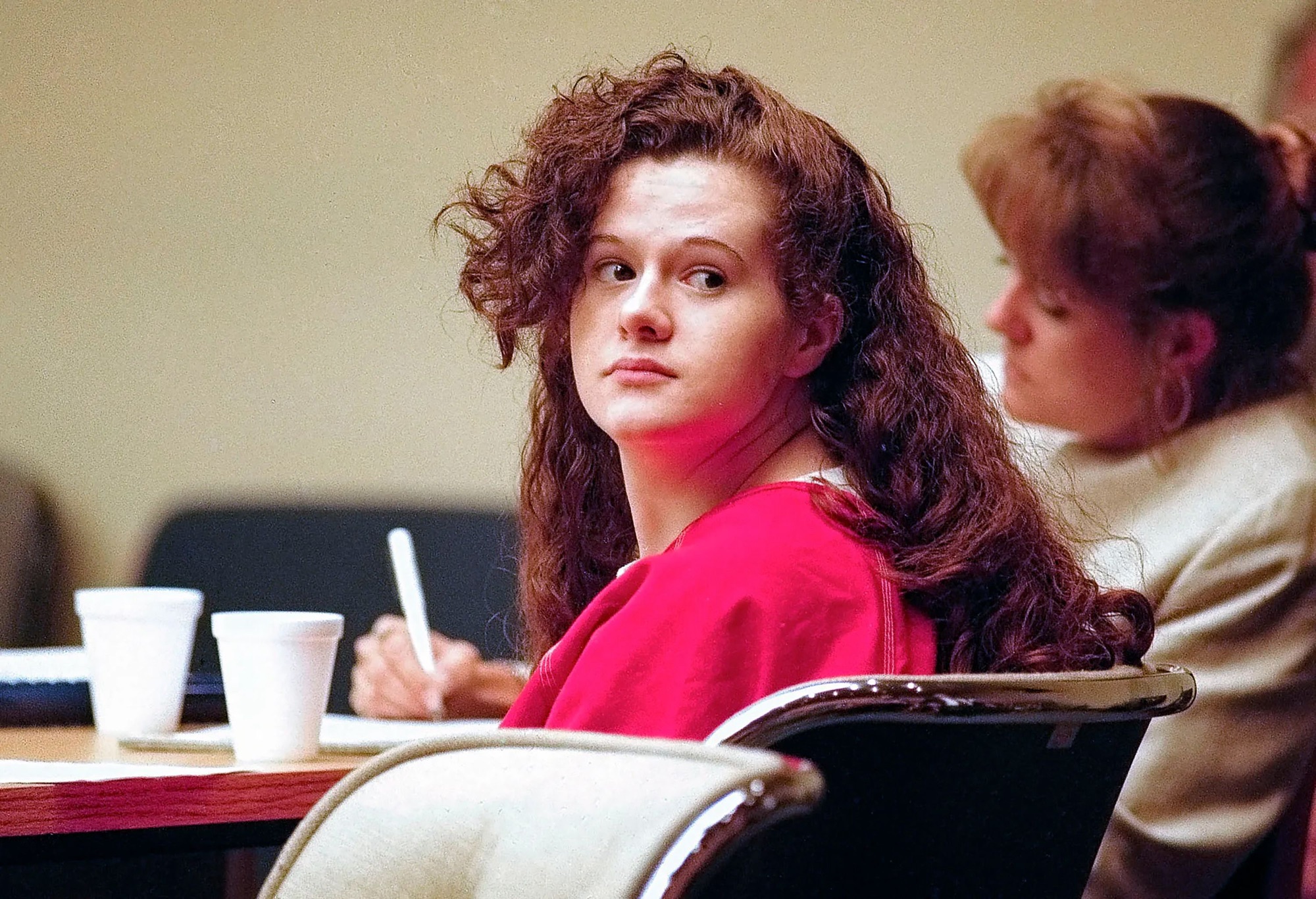
Christa Pike, a Tennessee woman convicted in the 1995 murder of Colleen Slemmer, was supposed to be the first woman executed in Tennessee in 200 years.
https://apple.news/AkBoqcAWMRu6iCMU4gLb8TQ
They tried to execute Pike via lethal injection. Twice. Neither one of them worked.
The subject of the death penalty opens up an absolute Pandora’s box of legal, moral, and ethical concerns—not the least of which being: Why do we kill people who kill people in order to prove that killing people is wrong?
I’ll try to come back to that one, because it’s not something I can easily answer.
Overall, I do not support the death penalty. I do agree that there are people who are a threat to humanity who, quite frankly, need to be removed from society; I also believe there are capable, redeemable people walking this earth. But the hard fact is that human beings are wrongly convicted of crimes every single day. If you’re going to have a death penalty, you have to be damn sure that the accused person did it and that you can conclusively prove it.
To be entirely clear: I am not disagreeing with the verdict in this case. She had her day in court. She went before a grand jury, a trial played out, and the prosecution proved beyond a reasonable doubt that she was guilty of a horrific crime. She received a lawful sentence. My issue isn’t whether she got a fair trial—it’s whether the state should be in the business of execution at all, and whether they have any moral or legal standing to try it again after failing twice.
The next question that arises is the method of execution. To be quite honest, none of them are terribly humane. I might have argued that lethal injection was the way to go, but cases like this provide clear proof that the protocol often fails.
For some context, the landscape across the country is all over the map. As it stands, 27 states still legally retain the death penalty, while 23 states (plus Washington D.C.) have completely abolished it. Within the states that have it, lethal injection remains the primary method, though a handful of states keep alternatives on the books—like electrocution, nitrogen hypoxia, or even the firing squad as rare options.
Most states have largely abandoned the electric chair, viewing it as a form of torture. Now, maybe it’s just because I finally watched The Green Mile for the first time a couple of weeks ago, but I’m certainly no fan of the electric chair either.
Incidentally, my own state of Michigan does not have the death penalty, and it never has; in fact, it’s written directly into our state constitution that we will not have capital punishment.
What about a case like Pike’s? While rare, a botched execution is not completely unprecedented. She committed the crime, she took the sentence, but the mechanism failed—twice. What do you do at that point? Do you keep pumping lethal drugs into a person until it finally works? Is it fundamentally unfair? Can one make the argument that this crosses into a form of double jeopardy—literally being subjected to execution more than once for the same crime?
Why do we hide these procedures behind closed curtains or hoods? If an execution is so gruesome that witnesses can’t bear to watch it, doesn’t that inherently prove the act itself is inhumane? We tell ourselves our justice system values rehabilitation and growth—we scream about holding people accountable for things they did as teenagers, yet we refuse to acknowledge that a human being can change over thirty years on death row. Instead, we prefer a system that warehouses people or enacts lethal vengeance.
When an execution fails, dragging someone back to the gurney to pump drugs into them a second time isn’t justice. It’s a Kafkaesque nightmare that dances dangerously close to double jeopardy of the worst kind—forcing a soul to survive their own execution only to wait for the state to try again.
I don’t even know if I’m offering an answer here. I’ve offered my opinion, sort of. But the system is broken. And if the system is broken, we can’t continue to proceed along this path.
Sometimes I wish I had become a lawyer. But then again, I’m not sure any amount of law school can make sense of a system this messed up.
(You can read more about the breaking details of the case via ABC News.)
This is a heavy one, and I don’t pretend to have all the answers. Where do you draw the line between accountability for a heinous crime and the reality that people can change over decades behind bars? More importantly, if a state can’t even get an execution right the first time, should they get a second shot, or does a botched attempt mean the state loses its window? Back me up, tell me I’m wrong, or let me know where you land on capital punishment entirely. Sound off in the comments and let’s talk about it
Rebuilding a life takes grit, consistency, and a lot of ‘Option C’ thinking. Having crossed the 1,000-day milestone, I’m now charting the territory beyond. The mission remains the same: No glitz. Just the work. New to the blog? Start your journey here to see the blueprint and the ‘Tricorder’ perspective behind the rebuild.
Today’s post is inspired by the WordPress Daily Prompt. While I’ve taken the topic in my own direction for the Road beyond 1,000 Days, you can find more responses to today’s prompt HERE.
Thanks for stopping by Rebuilding Rob. Be sure to like 👍, comment and subscribe below. It’s greatly appreciated! Also, feel free to follow me on social media and check out my recent posts!
- Artificial Intelligence vs. Actual Intelligence
- Character Analysis: The Beauty of Being Messy
- Why The Handmaid’s Tale Terrifies Me More Than 1984
- The Most Mismarketed Movie of the ’90s: Pleasantville
- Episode 3.9 No More Glaciers in LIVE!
Featured image courtesy of CNN
The article “Rob Reacts… The Botched Executions of Christa Pike” first appeared on Rebuilding Rob.


Leave a Reply