How do you stay resilient in hard times?
View all responses
To be honest with you, I’m not sure I have some grand, philosophical secret for staying resilient. Most of the time, I stay resilient because there simply isn’t another option. I don’t know how to do anything else.
I’ve talked before about that line from The Karate Kid Part III, where Terry Silver describes Daniel LaRusso by saying, “He’ll get up. He’s too dumb not to.” For a villain, it’s a pretty witty observation—and honestly, it fits me well. I don’t know how to give up. Or maybe more to the point, I don’t know how to live with myself if I chose to quit.
So I keep moving forward, no matter how slowly. Some progress always beats no progress, and it definitely beats falling further behind.
Lately, though, I’ve realized that resilience isn’t one flat gear. There’s a massive difference between survival mode and growth mode—and the car accident I went through recently reminded me of what both actually look like in practice.
Survival is just doing the bare minimum to face the world again: getting out of bed, going to work, keeping a job, and making sure the people who depend on you are taken care of. After my accident, things got very humbling, very fast. I was sore, bruised, and in a lot of pain—to the point where I genuinely thought I was going to spend the night in the hospital before they finally discharged me. Suddenly, I had no car, and hitting the gym every day was completely off the table.
That was pure “crawl” mode. As Dr. Martin Luther King Jr. said, “If you can’t run, then walk. If you can’t walk, then crawl, but whatever you do, you have to keep moving forward.” For those first two weeks, moving forward just meant borrowing Sierra’s car to get to work, grading papers while hurting, dealing with the insurance headaches, paying the ticket, and getting back to square one.
Even in the middle of that fog, my anchor was my boys. Whenever I hit a dark stretch where quitting sounds tempting, my first thought always goes back to Kid 1 and Kid 2. What would become of them? What would they think of me? Right after the wreck, I made a point to reach out to both of them. Things are naturally a little closer and easier with Kid 2, while Kid 1 and I don’t talk nearly as often as we probably should—so I made sure to send him a message saying, “Hey man, give me a call when you can.” Not because I wanted him to feel sorry for me, but because he needed to know what was going on. You don’t let family drift onto life support.
That’s actually a huge distinction for me. With family, any relationship is better than no relationship at all—you keep that line open. Romantic and platonic relationships, on the other hand, are a choice. And if two people are choosing to be together, putting in a half-assed effort feels worse than being completely alone.
I’ve been in those dead relationships before—with both X1 and X2—where you sleep in separate beds, stop enjoying each other’s company, and turn into glorified roommates just logistics-managing the kids and the bills. Eventually, the other person just becomes like an appliance in the room. Frankly, I’d rather be dead than go back to living like that.
That’s why I live by a 100% Policy now—no breadcrumbs, no coasting—and it’s a big reason Sierra is such a massive part of my resilience. We’ve both lived through those dead relationships, so we understand the value of actually showing up. When I look at how well she’s built her life, it makes me want to be a better man—not just to survive, but to actually grow.
Once I finally got the legal stuff wrapped up and bought a new car, I felt myself shift out of survival and back into thriving mode. Now, instead of just white-knuckling my way through the week, I’m asking myself: What can I do to make my situation better?
Right now, that looks like turning my focus back toward grad school. It looks like actively thinking about how I can move my relationship with Sierra forward, rather than just leaning on her to help me get back on my feet. And on a daily, practical level, it looks like keeping my car clean and keeping my bedroom in order. A cluttered, chaotic living space is usually a mirror of a cluttered, chaotic mindset—and I’m committed to keeping my house, and my head, in order.
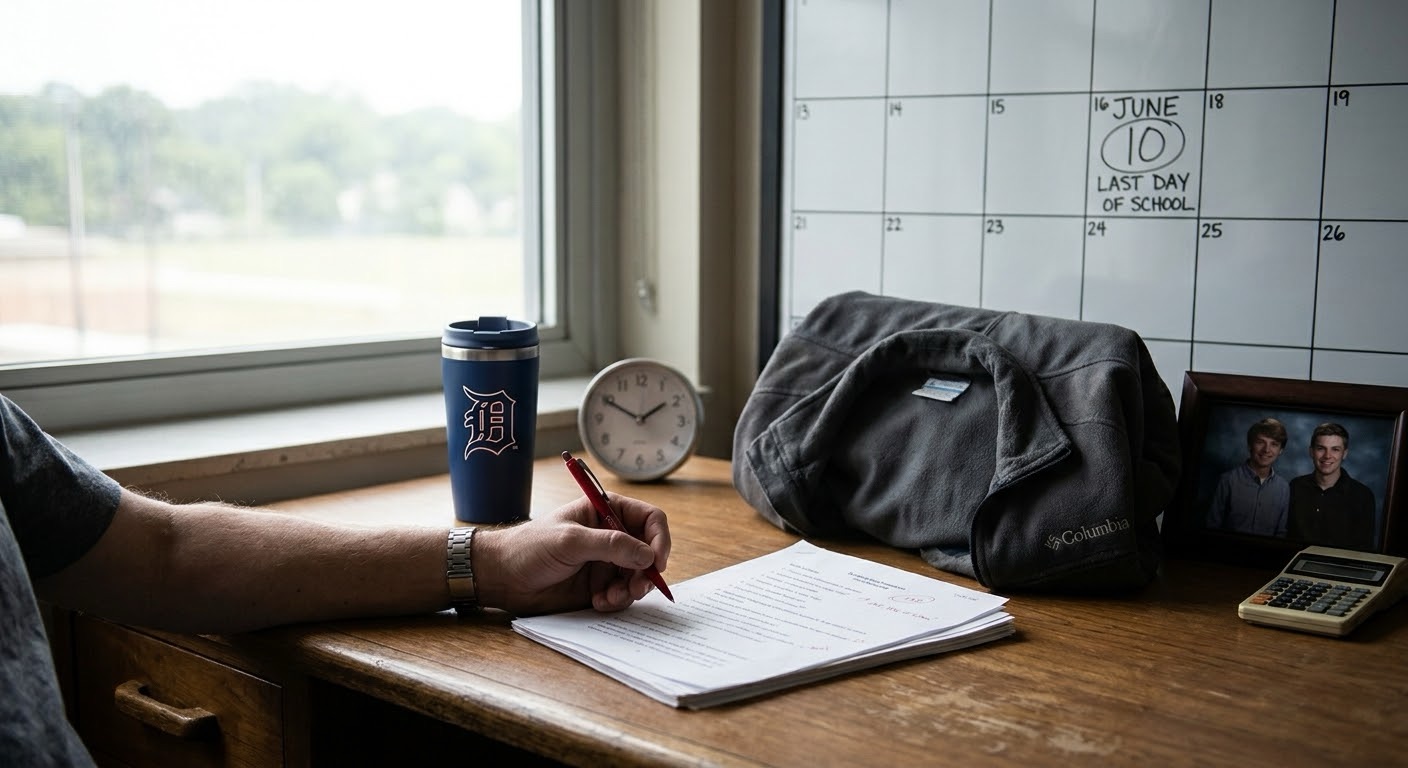
Resilience isn’t always heroic. Sometimes it’s just borrowing a car, grading a stack of papers while sore, and refusing to quit until you’re strong enough to start building again.
Rebuilding a life takes grit, consistency, and a lot of ‘Option C’ thinking. Having crossed the 1,000-day milestone, I’m now charting the territory beyond. The mission remains the same: No glitz. Just the work. New to the blog? Start your journey here to see the blueprint and the ‘Tricorder’ perspective behind the rebuild.
Thanks for stopping by Rebuilding Rob. Be sure to like 👍, comment and subscribe below. It’s greatly appreciated! Also, feel free to follow me on social media and check out my recent posts:
- Not Always Heroic: The Difference Between Surviving and Rebuilding.
- Faith Over Cynicism: What Happens When You Ignore Your Gut
- Learning to Forgive Myself
- A Throwback to Liberty City: Why I’d Choose the Lawless Fun of GTA 3
- Plan B for the Heart: The Power of Personal Options
AI art created by Google Gemini
The article “Not Always Heroic: The Difference Between Surviving and Rebuilding”

Leave a Reply