Yesterday, I ran through a fun, blank-check fantasy where I bought the Detroit Tigers for 24 hours, gave Tarik Skubal a massive upfront contract, and injected $100 million into the immediate payroll. It’s the ultimate fan dream: spend whatever it takes to put a winning product on the field.
But as I woke up, the cold, hard reality of modern sports economics slapped baseball fans everywhere right in the face.
The ink is barely dry on the breaking news from the ongoing collective bargaining negotiations. The Major League Baseball Players Association (MLBPA) had initially proposed raising the league minimum salary to $1.5 million and penalizing teams that refuse to maintain a baseline $150 million payroll. On Thursday, the 30 MLB owners threw down their long-awaited counter-proposal: a hard salary cap set at $245.3 million, a salary floor at $171.2 million, and a centralized 50-50 split of all league revenues.
The current collective bargaining agreement officially expires on December 1st. Because a hard salary cap is a line in the sand the players’ union has vowed never to cross, a massive, prolonged winter lockout is no longer just a pessimistic theory. It is a mathematical certainty.
The Real Cost of the Cap
To be completely honest, I’m torn on where I stand regarding a salary cap anymore. Part of me looks at the other major sports leagues and thinks baseball should have implemented something like this a long time ago just to keep things even. But the flip side makes me incredibly uneasy. A hard salary cap technically limits player earnings, creating a finite pool of money. If a cap goes into place, it essentially guarantees that billionaire owners get to reap even higher profit margins because they are legally restricted from spending on payroll. I guess that’s just the reality of doing business in 2026, but it leaves a bad taste.
What the league actually needs isn’t just a cap; it needs a radical overhaul of greater revenue sharing between teams. Right now, when a small-market team travels to Yankee Stadium or Dodger Stadium, the home team keeps the lion’s share of that massive local gate and regional TV money. Yes, the hometown crowd is paying to see their stars, but they are ultimately buying a ticket to see a competitive Major League Baseball game.
The reality is that Major League Baseball isn’t 30 separate companies trying to build a better mousetrap. They are essentially 30 subsidiaries of one singular company, and they all completely depend on each other to function. No matter how iconic a franchise is, they cannot generate billions of dollars in a vacuum. A sports league is an interdependent ecosystem—the powerhouse franchises need viable opponents to have a product to sell in the first place, and the revenue structure should reflect that balance.
Furthermore, instead of owners pocketing massive central revenue payouts and refusing to field competitive rosters, why isn’t there a true profit-sharing model? Look at the Big Three automakers right here in Michigan. When the company exceeds its profit expectations for the year, the employees get a performance bonus check. Why shouldn’t a portion of MLB’s record-breaking revenue be treated as incentive-based profit sharing for the players on the field?
The Myth of the Factory Worker
We also need to completely dismantle the archaic public perception of the professional athlete. Are these guys digging ditches? No. Are they working 14-hour days in a hot factory six days a week? Of course not. This isn’t the 1920s anymore, where players had to take winter jobs at the local hardware store just to stay afloat.
But it’s a massive double standard. When an NFL player holds out for a massive, fully guaranteed contract, the public cheers them on for securing their bag. But when a baseball player hits free agency and demands market value, the narrative instantly shifts. I hear more average people talking about how “it’s a shame they don’t just play for the love of the game” when it comes to baseball than any other sport. The owners certainly aren’t running charities, yet the public routinely buys into the corporate narrative.
A Dangerous Game of Chicken
The last time MLB owners explicitly pushed for a hard salary cap was over thirty years ago, triggering the infamous 1994 strike. That stoppage crippled the sport, canceled a World Series, and alienated a generation of fans.
But baseball is playing an entirely different game of chicken in 2026. If the owners lock the players out this winter and cancel a massive chunk of the 2027 season, I don’t think fans will get angry.
I think they will just move on.
In 1994, there was no smartphone, no streaming ecosystem, and no endless buffet of digital entertainment competing for our attention. Baseball’s gatekeepers are profoundly overestimating their cultural leverage if they think a modern audience will patiently wait around through a multi-month corporate standoff.
So, what happens to a baseball addict if the worst-case scenario becomes reality?
Check back on Monday for Part 3, where we look at how to feed the baseball fix locally, the absurdity of the current international player posting system, and the radical fan-first marketing lessons MLB desperately needs to learn from “Banana Ball.”
Rebuilding a life takes grit, consistency, and a lot of ‘Option C’ thinking. Whether I’m closing in on 1,000 consecutive days of blogging or reflecting on the decade of work that brought me here, the mission remains the same: No glitz. Just the work. New to the blog? Start your journey here to see the blueprint and the ‘Tricorder’ perspective behind the rebuild.
Today’s post is inspired by the WordPress Daily Prompt. While I’ve taken the topic in my own direction for the Road to 1,000 Days, you can find more responses to today’s prompt HERE.
Thanks for stopping by Rebuilding Rob. Be sure to like 👍, comment and subscribe below. It’s greatly appreciated! Also, feel free to follow me on social media and check out my recent posts!
- Rob Reviews: Star Trek: Strange New Worlds season 4, episode 1 “Valles Marineris”
- Priceless: Why College Was My Best Purchase (Even If I’m Still Paying For It)
- The Legend of the Street Fight
- Battle Tested and Flying Solo 
- The TikTok Paradox: A Screen Time Confession
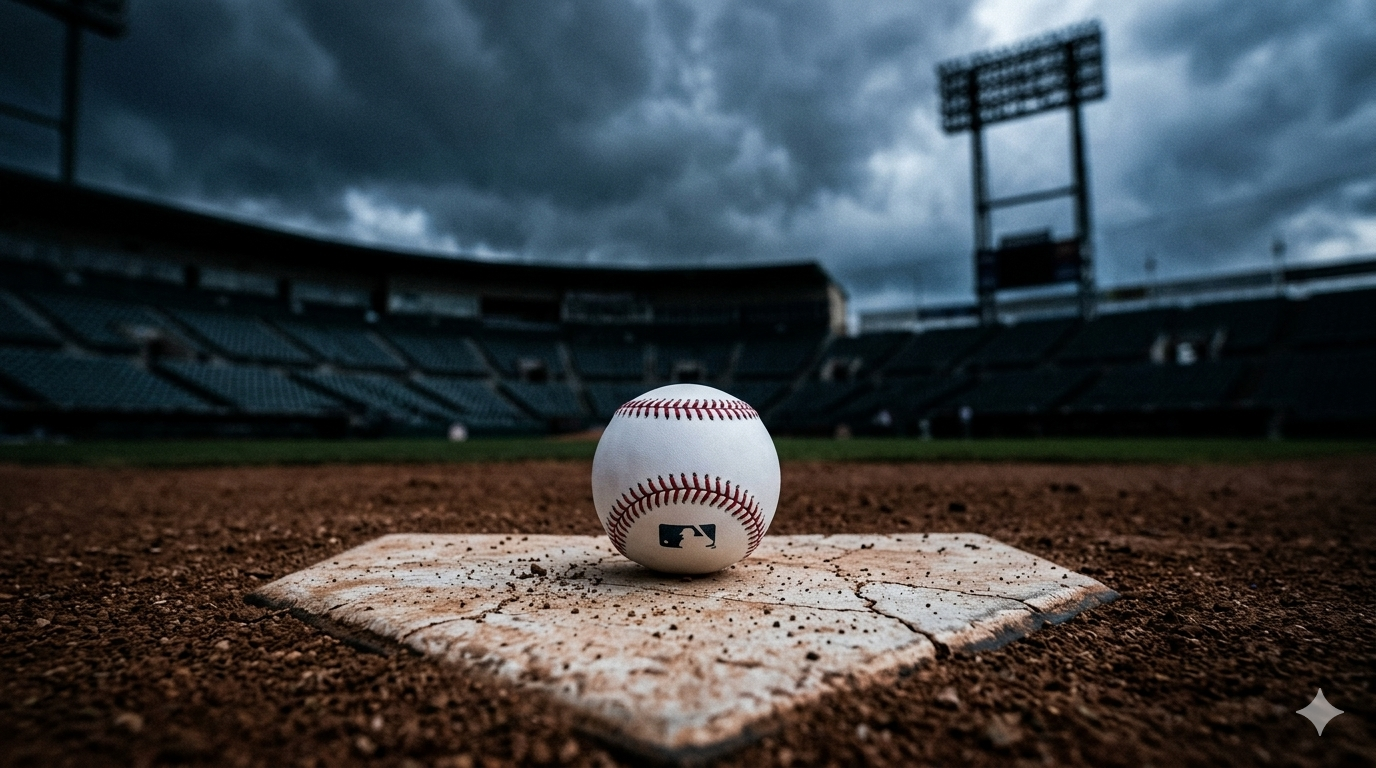
AI image created by Google Gemini
The article “The Cost of the Game (Baseball on the Brink – Part 2)” first appeared on Rebuilding Rob


Leave a Reply